 Reviews



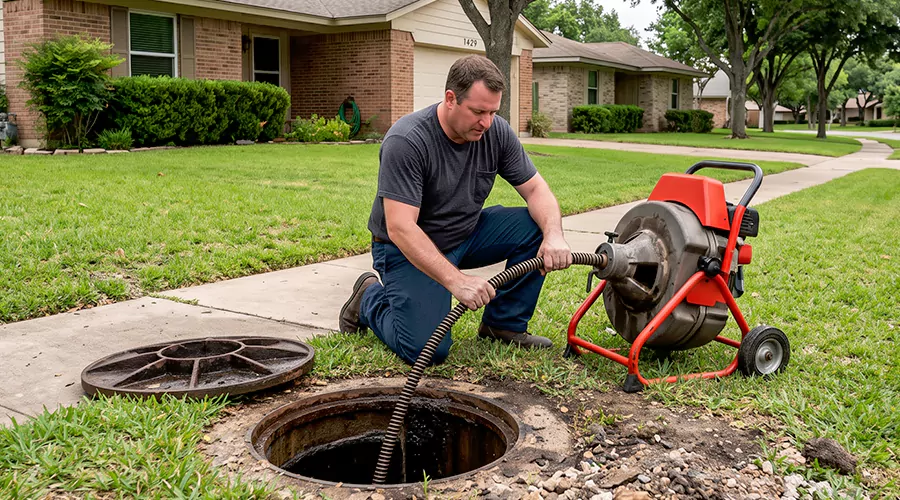
To fix a clogged sewer line, stop using the affected plumbing and identify whether the blockage is inside the main sewer or an individual drain. Some obstructions can be removed with a suitable sewer auger. However, tree roots or damaged underground piping may require a different approach. Main sewer line clog repair costs approximately $380 on average in the United States in 2026. Mechanical snaking commonly costs 100–250, while professional hydro jetting generally costs 350–600.
The correct method depends on the obstruction's location and the condition of the underground pipe. Clearing a blockage without identifying its cause can allow the problem to return.
What Should You Do First When Your Sewer Line Is Clogged?
Stop using household plumbing when several fixtures show signs of a shared sewer blockage. Continuing to flush toilets or operate water-using appliances can force more wastewater into the restricted pipe. This may cause sewage to return through showers or lower drains.
Start with these precautions:
- Stop flushing affected toilets.
- Avoid running sinks or showers.
- Do not operate the dishwasher.
- Stop the washing machine.
- Identify which fixtures are affected.
- Check whether sewage is backing up.
- Keep people away from contaminated water.
- Locate the main sewer cleanout if you know where it is.
Lowe's specifically recommends avoiding household plumbing use when a main drain blockage is suspected because additional water can contribute to wastewater backup. If sewage has already entered the home, treat it as contaminated wastewater. Protective clothing is appropriate during cleanup and direct contact should be avoided.
How Can You Tell Whether the Main Sewer Line Is Clogged?
A main sewer blockage usually affects more than one fixture because the obstruction sits after several branch drains have joined. A single slow bathroom sink is more likely to have a local blockage. A toilet that causes water to rise in a shower points toward a shared drainage problem.
| Symptom | Local Drain Problem | Possible Main Sewer Clog |
|---|---|---|
| One sink drains slowly | Common | Less typical |
| One toilet clogs | Common | Possible |
| Several drains become slow | Less typical | Common |
| Toilet causes shower backup | Unusual | Strong warning sign |
| Sewage enters a floor drain | Unusual | Strong warning sign |
| Several toilets stop draining | Less typical | Common |
| Outdoor cleanout overflows | No | Main-line problem likely |
A main sewer restriction can also produce gurgling because wastewater and air no longer move normally through the drainage system. Do not keep testing fixtures after wastewater has already backed up.
What Usually Causes a Clogged Sewer Line?
Sewer line blockages commonly develop from grease or unsuitable solid waste. Tree roots can create more persistent obstructions when they enter damaged underground piping. Older lines may also develop structural problems that repeatedly catch debris.
Common causes include:
- Cooking grease: Deposits stick to the pipe interior and collect additional waste.
- Disposable wipes: These materials do not break apart like ordinary toilet paper.
- Foreign objects: Solid items can become lodged in the line.
- Tree roots: Roots can enter cracks or defective pipe joints.
- Scale buildup: Deposits gradually reduce the available pipe opening.
- Pipe sagging: A low section allows wastewater and solids to collect.
- Displaced joints: Misaligned connections can trap passing material.
- Damaged sewer pipe: Cracks or deterioration interfere with normal drainage.
Portland's wastewater authority identifies wipes and grease among the materials that can contribute to sewer backups. A blockage that returns soon after cleaning deserves investigation of the pipe rather than repeated treatment of the same symptom.
Where Is the Main Sewer Cleanout?
The sewer cleanout is a dedicated access point that provides a more direct route into the main drainage line. Depending on the property, it may be in a basement or crawl space. It may also be located in a garage or outside near the foundation. Cleanouts commonly look like capped pipes connected to a larger drainage line. They may be made from PVC or older metal piping.
Lowe's identifies the main cleanout as the usual access point for clearing a household main drain. A buried or inaccessible cleanout should not be guessed at by digging randomly around underground utilities.
Can You Open the Sewer Cleanout Yourself?
Opening a cleanout can release backed-up wastewater, so it requires caution even when the fitting is easily accessible. Wastewater may be standing behind the cap under pressure. Removing the cap quickly can cause sewage to spill into the surrounding area.
If you are dealing with an accessible cleanout:
- Stop all household water use.
- Wear appropriate protective gloves.
- Keep your face away from the cap.
- Clear people from the immediate area.
- Position yourself to the side.
- Loosen the cap gradually.
- Be prepared for wastewater to escape.
- Stop if the situation cannot be controlled safely.
Lowe's warns that wastewater can drain from the opening when the cleanout plug is removed or when the blockage is broken. Do not remove a cleanout cap when you are unprepared for a large sewage release.
How Do You Clear a Sewer Line With an Auger?
A sewer auger can clear some reachable blockages by breaking up material or retrieving debris through the cleanout. Main-line augers are larger and more powerful than ordinary sink snakes. Their rotating cables can also damage piping or injure the operator if used incorrectly.
For suitable equipment and an accessible cleanout, the general sequence is:
- Stop household water use.
- Open the cleanout cautiously.
- Position the auger according to its instructions.
- Feed the cable into the sewer line slowly.
- Advance until resistance is reached.
- Work the cable without forcing it.
- Retract the cable carefully.
- Remove captured debris.
- Repeat only if progress continues.
- Test drainage gradually after clearing.
Lowe's identifies plumbing augers and sewer rods as appropriate mechanical tools for certain main-line clogs. Powered sewer machines create substantial torque. They should not be operated like a small hand snake. If the cable binds or repeatedly meets solid resistance, stop rather than applying more force.
When Is Hydro Jetting Used?
Hydro jetting uses high-pressure water to remove grease or other deposits from sewer-pipe surfaces. It can clean more of the pipe interior than a cable that simply punches an opening through a soft blockage. The condition of the sewer should be considered before high-pressure cleaning.
Hydro jetting is commonly considered when:
- Grease coats the pipe interior.
- Heavy buildup remains after mechanical clearing.
- The same accumulation repeatedly returns.
- A larger section of pipe needs cleaning.
- A camera inspection shows deposits that are suitable for jetting.
Professional hydro jetting typically costs 350–600 in 2026 according to Angi. Hydro jetting is not a repair for collapsed piping. High-pressure equipment should also not be used blindly on a sewer whose condition is unknown.
When Does a Sewer Camera Help?
A sewer camera helps distinguish an ordinary obstruction from a structural problem inside underground piping. The camera can reveal root intrusion or damaged joints. It can also show pipe sagging or other conditions that ordinary snaking cannot identify.
A camera inspection becomes particularly useful when:
- The sewer blockage repeatedly returns.
- Root intrusion is suspected.
- The auger repeatedly stops at the same location.
- An older sewer line has known deterioration.
- Clearing restores drainage only temporarily.
Angi reports 2026 sewer camera inspection costs of approximately 271–1,725 per visit, depending on line length and equipment. A camera is usually most useful after enough flow has been restored for the lens to see the pipe clearly.
What Should You Avoid When Clearing a Main Sewer Line?
A main sewer blockage should not be treated like a simple bathroom sink clog. The line is larger and may contain sewage. Powerful equipment can cause injury or pipe damage when used without suitable training.
Avoid these common mistakes:
- Pouring repeated chemical drain cleaners into the sewer.
- Mixing different drain-opening products.
- Running additional water into an already backed-up system.
- Opening a pressurized cleanout carelessly.
- Forcing a powered cable through rigid resistance.
- Using hydro jetting before considering pipe condition.
- Assuming temporary drainage means the entire obstruction is gone.
- Entering a sewer structure or other confined space.
Chemical products are particularly poor substitutes for diagnosing roots or damaged sewer piping. A mechanical obstruction or structural defect needs a physical solution.
How Do You Know the Sewer Line Is Actually Clear?
A cleared sewer should handle normal wastewater flow without causing another fixture to gurgle or back up. Testing should be gradual because a partially cleared blockage may pass a small amount of water while failing under normal household demand.
After the blockage has been cleared:
- Close and secure the cleanout.
- Run one faucet briefly.
- Observe lower fixtures.
- Increase the water flow gradually.
- Test another fixture.
- Flush one toilet.
- Watch for gurgling.
- Stop if water backs up again.
Avoid running every appliance simultaneously as the first test. A blockage that returns quickly may not have been fully removed.
How Much Does It Cost to Fix a Clogged Sewer Line in 2026?
The average cost to clear a main sewer clog is approximately $380 in the United States in 2026. The final price depends on the obstruction and the clearing method. A structural sewer problem is a separate repair and can cost much more.
| Sewer Service | 2026 U.S. Cost |
|---|---|
| Main sewer clog repair average | $380 |
| Main-line snaking or rodding | 100–250 |
| Hydro jetting | 350–600 |
| Sewer camera inspection | 271–1,725 |
| More extensive sewer repair | Separate project |
Angi notes that tree roots generally require more work than ordinary grease or debris. Do not simply add every figure in the table. These are different services and many sewer clogs will not require all of them.
When Should You Call a Professional?
Professional sewer cleaning is appropriate when several fixtures back up or a suitable main-line auger cannot restore drainage. Repeated blockage also deserves professional diagnosis because the obstruction may be caused by roots or structural pipe damage.
Seek professional assistance when:
- Sewage is entering the home.
- Several drains are completely blocked.
- A powered sewer machine would be required.
- Root intrusion is suspected.
- The cleanout cannot be accessed safely.
- The auger repeatedly meets hard resistance.
- The blockage returns shortly after clearing.
- A sewer camera inspection is needed.
A sewer professional can match the cable or jetting equipment to the pipe and investigate structural problems before unnecessary excavation.
How Can You Prevent Another Sewer Line Clog?
Preventing sewer clogs starts with limiting what enters household drains and addressing structural defects that repeatedly trap waste. Good habits can reduce grease and wipe-related blockages. They cannot correct a collapsed line or damaged joint.
Helpful practices include:
- Dispose of cooking grease separately.
- Flush only toilet paper and appropriate waste.
- Keep wipes out of toilets.
- Use strainers where appropriate.
- Address recurring drainage symptoms early.
- Maintain access to the sewer cleanout.
- Investigate known tree-root problems.
- Repair confirmed structural defects.
Portland specifically recommends keeping fats and grease out of sewer lines and avoiding unsuitable flushed materials.
Conclusion
To fix a clogged sewer line, stop household water use and determine whether several fixtures are affected. The main cleanout provides the preferred access point for many sewer-clearing methods. Mechanical snaking can remove certain blockages, while hydro jetting or camera inspection may be appropriate for more difficult conditions. Repeated backups can indicate pipe damage or tree roots. If sewage enters the home, avoid additional water use and address the problem promptly.
Frequently Asked Questions
Can a main sewer clog clear itself?
A significant main-line obstruction rarely resolves reliably on its own. Temporary drainage can occur while material remains inside the pipe.
Can I use chemical drain cleaner in a main sewer line?
Chemical cleaners are not a suitable solution for roots or structural sewer problems. They can also create hazards during later mechanical work.
How do I know if roots are clogging the sewer?
Recurring blockages can raise suspicion, but a sewer camera provides much stronger evidence.
Does hydro jetting fix broken sewer pipes?
No. Hydro jetting cleans suitable piping. It does not repair cracks or collapsed sections.
Why does my sewer clog keep returning?
The line may contain remaining deposits or roots. A damaged section can also continue catching waste.